By Allyson Dix
For Glasgow News 1
“I just happened one day to pick it up at a gas station. I really didn’t even know what it was.”
For one Kentucky resident, what began as a purchase at a place where people stop for fuel and food turned into a months-long struggle with an unexpected dependence.
What followed, Shawn Campbell said, was an excruciating detox while he was incarcerated at the local jail.
Kratom and some kratom-derived products have been available for purchase in Kentucky, although state restrictions apply to certain products. A broarder statewide prohibition on preparing, manufacturing, and selling kratom products is scheduled to take effect July 1, 2027.
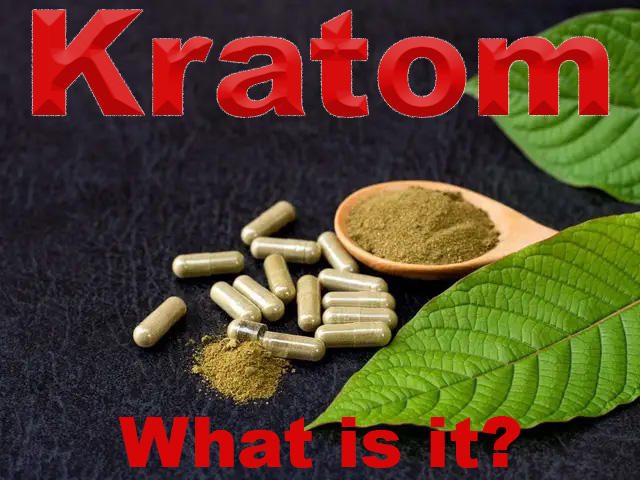
Kratom, in its natural form, is derived from a tropical tree native to Southeast Asia. In traditional medicine, the leaves are chewed or brewed for a variety of uses, including pain management.
Kratom is not derived from the opium poppy, which produces raw opium, the source of opioids such as morphine and heroin. Despite these differences, kratom’s primary alkaloids, mitragynine and 7-hydroxymitragynine (7-OH), can act on the brain’s opioid receptors, as well as other receptors, although their effects and risks may differ from those of other opioids.

Shawn Campbell was surprised to find a drug as potent as kratom available over the counter in convenience stores. Photo submitted
Campbell said he found it unbelievable that the product was legal to purchase so easily.
“I was flabbergasted I could buy it over the counter,” Campbell said. “If you’re an addict, I was almost hooked the first time I took them.”
Campbell’s long battle with illicit drugs led him to pick up a kratom product in an effort to ease the effects of coming down from methamphetamine. He said he did not expect what he thought was a natural product to lead to a new struggle.
“It just popped up on the scene, and somebody figured out how to concentrate it down into really pure form and made it powerful,” Campbell said.
In recent years, manufacturers have marketed concentrated kratom extracts and other products containing high levels of the psychoactive alkaloids. Researchers and public health officials have raised concerns about the potential risks of high-potency kratom products.
Campbell said he struggled with kratom use for about eight months after already overcoming a heroin addiction. He described the withdrawal symptoms as comparable to, if not worse than, those he experienced with heroin.
Campbell, who lived in Barren County at the time but now lives and works in Warren County, said he tried to detox on his own several times without success, never fully achieving a complete detox from kratom until he was in jail.
“They were like, ‘You’re detoxing off of what?’” Campbell said of the jail staff. “I was telling them I was dying, and they didn’t even know what I was talking about.”
“I don’t ever want to have to go through that again, coming down off of it. It’s horrible,” Campbell said.
Campbell said that he hopes to see more education and research on kratom products and their effects.
“I just feel like there’s gonna be an epidemic before they even realize it, you know?”
Barren County
Two people have died in Barren County with known kratom-related involvement since 2018, according to Barren County Coroner Tim Gibson.
In 2018, a 49-year-old white female died with kratom and other drugs in her system. In 2021, a 35-year-old white female died with kratom and one other drug detected in her toxicology report.
According to a study published by the National Library of Medicine, the bioactive alkaloids in kratom can interact with other substances in unpredictable or harmful ways. The study identifies potential risks associated with combining kratom and opioids, including fentanyl, buprenorphine, and oxycodone.
Using a ten-year analysis from 2015 to 2025, the National Poison Data System found an approximately 1,200% increase in kratom-related exposures, with a record high in 2025; however, the study did not differentiate between the traditional leaf and the newer products currently being marketed in communities.
In January 2026, Matt Mutter, a local citizen and former law enforcement officer, shared concerns about increasing kratom use in the community and called for consideration of a local ordinance restricting kratom sales. His goal, he said, was to help bring awareness and educate community members about the dangers of kratom.
“It’s called gas station heroin, if that tells you anything of how dangerous this drug can be,” Mutter told the Barren County Fiscal Court, before describing experiences that other local residents had shared with him about kratom. One of those people, Mutter said, required hospitalization.
Mutter also discussed the state’s legal framework for kratom at that time, noting that in 2025, Gov. Andy Beshear’s administration moved to prohibit 7-OH from being sold, reclassifying it as a Schedule I controlled substance.
Still, Mutter said he would like to explore the potential for a local ban on kratom sales.
“What can we do to prevent this from being sold in our stores here in Barren County?” Mutter asked.
Barren County Attorney Mike Richardson, who was elected in November 2022, said he had seen kratom-related concerns surface while serving as an assistant commonwealth’s attorney.
“Sometimes you got folks trying to shake an addiction and they might look at something like kratom, which was legal, and you could buy it as long as you’re 21,” Richardson explained. “They would start using that, but it has psychoactive components, something that became a problem.”
“Me personally, as a prosecutor, I would be all for banning that substance. There’s no known legitimate medical use for it…I think it would be beneficial to have an ordinance to ban it.”
Richardson said the fiscal court could pursue such an ordinance and Barren County Judge-Executive Jamie Bewley Byrd supported the potential move.
“I would like to see Mr. Richardson pursue to see the legalities of how to kind of put together some type of ordinance,” Byrd said in January.
Richardson said he would work on drafting an ordinance at that time, if desired.
“As a citizen, I’d rather see us be proactive than reactive,” Mutter said.
Kratom’s current legal framework
Kentucky’s approach to kratom is set to change significantly in 2027, as state lawmakers have approved a statewide prohibition on preparing, manufacturing, and selling kratom products. Meanwhile, other states and local governments across the country have adopted their own restrictions.
In 2024, Kentucky legislators passed statewide regulations governing certain kratom products, including restrictions involving harmful or poisonous ingredients, certain 7-OH concentrations, synthetic alkaloids, residual solvents, and labeling requirements, as well as prohibiting individuals from purchasing under the age of 21.
In November 2025, the governor of Kentucky moved to classify certain concentrations or types of 7-OH as a Schedule I drug.
In 2026, however, Kentucky lawmakers passed legislation establishing a broader prohibition on kratom products. The effective date was subsequently changed from Jan. 1, 2027, to July 1, 2027. It is unclear at the time of publication why the date was delayed six more months.
Nine states, including Tennessee, have adopted bans on kratom, with varying legal consequences.
Local governments in some parts of the country have enacted their own restrictions on kratom sales, including Suffolk County, Washington County, and Oneida County in New York.
In 2016, the Drug Enforcement Administration (DEA), a federal law enforcement agency, announced plans to classify certain kratom components as a Schedule I drug, but that was ultimately withdrawn after receiving significant public opposition.
In July 2026, the DEA announced a new effort for its intent to reclassify 7-OH and three related substances as a Schedule I drug.
Moving forward
For people like Shawn Campbell and others, kratom products have had serious personal consequences.
Even after Kentucky restricted concentrated 7-OH products in 2025, Campbell said he believed manufacturers are repackaging products and continue to sell similar products.
He also said he would support local ordinances restricting kratom products, noting that such a ban might have prevented him from ever starting them.
“I could just go to the gas station and get some,” Campbell said. “That’s when I realized I was in trouble.”
Barren County Magistrate Marty Kinslow said he has a genuine concern about the sale of kratom products in the community, but he said he is uncertain if a countywide sales prohibition would provide any quicker action than the state’s upcoming ban.
“If we can, I would consider taking that action,” Kinslow said.
Mutter said in a follow up response this week that he commends state lawmakers for addressing kratom and he hopes to continue educating people about kratom.
“My main goal was, and still is, to educate the general public on kratom,” Mutter said. “I applaud our legislators for taking the actions they have.”
Things to Know
For clarity, this story uses “kratom” as a general term when discussing kratom-based substances. However, traditional kratom leaf, concentrated extracts, 7-OH, and synthetic alkaloids are not necessarily interchangeable
The Food and Drug Administration (FDA) has not approved kratom for any medical use and has warned about potential risks associated with kratom products.
If someone has ingested kratom, with or without other substances and experiences signs of distress – including extreme confusion, difficulty breathing, or unresponsiveness – call 911.
Comments